Lightning Arrester System in Bangladesh
Protect your facility from lightning strikes with a professionally designed and installed lightning arrester system. Kinetic Engineering BD provides complete lightning protection solutions for factories, commercial buildings, warehouses, and industrial infrastructure across Bangladesh — built to national and international safety standards.
BNBC Compliance Notice The Bangladesh National Building Code (BNBC) recommends lightning arresters for buildings above 22 metres and mandates them for structures above 33 metres. All Kinetic Engineering BD installations are designed in full compliance with BNBC, IEC 62305, and NFPA 780. |
What is a Lightning Arrester System?
 System?
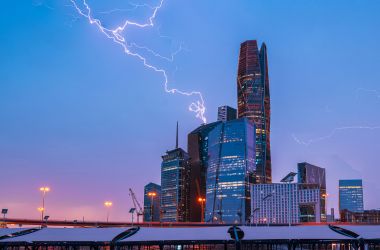
A lightning arrester system — also referred to as a Lightning Protection System (LPS) — is an engineered safety mechanism that intercepts a lightning strike and safely directs the electrical energy into the ground, preventing it from passing through a structure, its occupants, or its electrical equipment.
Without a properly installed LPS, a direct lightning strike can destroy electrical panels, disable CCTV and control systems, cause fires, and create life-threatening situations for workers and occupants.
In Bangladesh — where the monsoon season brings exceptionally high lightning activity — this is a critical engineering requirement for any serious industrial or commercial facility.
An LPS typically consists of five integrated components:
- Air terminal (lightning rod or ESE device) — captures the lightning discharge
- Down conductors — carry current safely from terminal to ground
- Earth termination system — disperses energy safely into the earth
- Equipotential bonding — prevents dangerous step and touch voltages
- Surge Protective Devices (SPD) — protect internal electrical and electronic systems
Types of Lightning Arrester Systems We Install
Kinetic Engineering BD designs and installs all major types of lightning protection systems, based on your facility’s structure, risk profile, and compliance requirements.
1. Conventional Franklin Rod (Spike Arrester)
The conventional lightning rod is a copper or copper-alloy conductor mounted at the highest point of a structure. It provides a preferred low-resistance path for lightning current to travel to earth. This system is cost-effective and widely used for smaller buildings and structures with straightforward geometry.
Protection coverage is typically determined using rolling sphere methodology (IEC 62305), and multiple rods may be required for large structures.
2. Early Streamer Emission (ESE) Lightning Arrester
The ESE lightning arrester is an advanced active protection system that works by generating an upward ionised leader ahead of natural leader formation, effectively capturing the lightning discharge before it strikes the structure. This gives the system a significantly larger protection radius compared to conventional rods.
ESE systems are specified under the French standard NF C 17-102 and are ideal for:
- Large industrial facilities and factories
- Tall buildings and multi-storey structures
- Areas with high flash density or complex roof geometries
- Projects where minimising the number of air terminals is a priority
3. Surge Protective Devices (SPD)
SPDs protect internal electrical and electronic systems from transient overvoltages caused by indirect lightning strikes and switching surges. They are installed at the main distribution board, sub-distribution boards, and at terminal equipment such as PLCs, computers, and communication systems.
IEC 62305-4 requires SPD protection as part of a complete internal LPS, particularly for industrial and commercial facilities with sensitive automation and control equipment.
4. Earthing and Grounding Systems
A reliable earthing system is the foundation of any lightning protection installation. Without low-resistance earth connections, the system cannot safely dissipate the lightning current. Kinetic Engineering BD engineers and installs deep-driven earth rods, earth pits with conductive backfill, and earth testing to IEC and BNBC standards.
Where Lightning Arrester Systems Are Required
Lightning protection is a critical requirement across a wide range of industrial and commercial facilities in Bangladesh. Kinetic Engineering BD regularly installs LPS solutions at:
- Ready-made garment (RMG) and textile factories
- Pharmaceutical manufacturing plants
- Power plants and substations
- Warehouses and distribution centres
- Commercial buildings, towers, and shopping complexes
- Telecommunications towers and base transceiver stations (BTS)
- Industrial estates and export processing zones (EPZ)
- Educational institutions, hospitals, and government infrastructure
- Solar power installations
Standards and Compliance
All Kinetic Engineering BD lightning protection installations are designed and executed in accordance with the following standards:
- BNBC (Bangladesh National Building Code) — lightning protection requirements
- IEC 62305 (Parts 1 to 4) — international lightning protection standard
- NF C 17-102 — Early Streamer Emission (ESE) system standard
- NFPA 780 — Standard for Installation of Lightning Protection Systems
- IEEE — grounding and earthing standards
Compliance documentation and installation certificates can be provided for factory audit purposes including ACCORD, NIRAPON, and BGMEA safety compliance checks.
Our Lightning Protection System Process
Kinetic Engineering BD follows a structured engineering process for every LPS project to ensure reliability, safety, and compliance.
Step 1 — Site Survey and Risk Assessment
Our engineers conduct a detailed site survey to assess structure geometry, height, usage type, and the local lightning flash density (Ng) for the region. A formal risk assessment per IEC 62305-2 or NF C 17-102 Annex A is produced to determine the required Protection Level (LPL I–IV).
Step 2 — System Design
A complete LPS design is prepared, specifying the type of air terminal, positioning, down conductor routing, earth termination layout, and SPD requirements. All designs are reviewed by qualified engineers before submission to the client for approval.
Step 3 — Supply of Certified Equipment
Kinetic Engineering BD sources LPS components from certified manufacturers meeting IEC, NFC, and NFPA requirements. All copper conductors, air terminals, earth rods, and SPDs are genuine, traceable equipment.
Step 4 — Professional Installation
Our qualified electrical and safety engineers install the complete system, including air terminal mounting, conductor fixing, earth pit construction, bonding, and SPD installation. Work is carried out with minimal disruption to ongoing operations.
Step 5 — Testing and Commissioning
After installation, the earthing resistance is tested and recorded. The complete system is inspected, and a commissioning certificate is issued. We recommend periodic maintenance testing every 12 months in high lightning activity areas.
Why Choose Kinetic Engineering BD for Lightning Protection?
- Qualified engineers with hands-on LPS design and installation experience
- Compliance with BNBC, IEC 62305, NFC 17-102, and NFPA 780
- Certified and traceable equipment from trusted manufacturers
- Full project documentation for factory compliance and audit requirements
- Serving factories, commercial buildings, and industrial facilities across Dhaka and Bangladesh
- Post-installation testing, maintenance, and technical support
Frequently Asked Questions — Lightning Arrester System in Bangladesh
Q1. Is a lightning arrester system mandatory in Bangladesh?
Yes. The Bangladesh National Building Code (BNBC) recommends lightning protection for buildings above 22 metres and makes it mandatory for structures above 33 metres. Additionally, international compliance requirements from ACCORD, NIRAPON, and brand safety auditors make LPS installation a practical necessity for most export-oriented factories.
Q2. What is the difference between a lightning arrester and a surge protector?
A lightning arrester (external LPS) protects the physical structure and personnel by intercepting and safely conducting the lightning discharge to earth. A surge protector (SPD) is an internal protection device that guards electrical and electronic equipment against overvoltages transmitted through the power supply or data lines. A complete lightning protection system requires both external and internal protection.
Q3. What is an ESE lightning arrester and how is it different from a conventional rod?
An ESE (Early Streamer Emission) lightning arrester actively generates an upward ionised leader ahead of natural formation, giving it a larger radius of protection than a conventional passive rod. A single ESE device can protect a much larger area, making it preferred for large industrial and commercial facilities. ESE systems are governed by NF C 17-102.
Q4. How long does a lightning protection system installation take?
Installation time depends on the size and complexity of the structure. A single-building installation typically takes two to four days. Large industrial facilities or multi-structure projects may require one to two weeks. Kinetic Engineering BD plans all work to minimise disruption to factory and building operations.
Q5. What is the cost of a lightning arrester system in Bangladesh?
The cost depends on the type of system selected (conventional rod, ESE, or SPD), the size of the structure, the number of air terminals required, and earthing complexity. Kinetic Engineering BD provides site-specific quotations after a preliminary survey and risk assessment. Please contact us for a project consultation.
Q6. How often should a lightning protection system be inspected?
IEC 62305 and BNBC recommend annual visual inspection and earth resistance testing for lightning protection systems in high lightning density areas such as Bangladesh. Kinetic Engineering BD offers maintenance contracts and periodic testing services.
Q7. Can Kinetic Engineering BD provide compliance certificates for factory audits?
Yes. Kinetic Engineering BD provides full documentation including design drawings, equipment certifications, installation reports, and earth test records. This documentation is accepted for ACCORD, NIRAPON, and buyer safety compliance audits.
Protect Your Facility — Contact Kinetic Engineering BD Today
A lightning strike can destroy equipment, halt production, and endanger lives. Do not leave your facility unprotected. Kinetic Engineering BD provides expert lightning arrester system design, supply, and installation for industrial and commercial facilities across Bangladesh.
Discuss your lightning protection requirement with our engineers. We provide site surveys, risk assessments, full system design, and professional installation — with complete compliance documentation.
Contact Kinetic Engineering BD: www.kinetic-bd.com